Buy aquapolimery.eu ?
We are moving the project
aquapolimery.eu .
Are you interested in purchasing the domain
aquapolimery.eu ?
domain@kv-gmbh.de · 0541-91531010
Buy aquapolimery.eu ?
How do you calculate the following telescoping sum?
To calculate a telescoping sum, you first need to express the summands as a partial fraction decomposition. Then, you simplify the sum by pairing up terms that cancel each other out when added together. Finally, you evaluate the remaining terms to find the sum of the series. This method allows you to simplify the sum and find a closed-form expression for the sum. **
How do I calculate the limit of this telescoping sum?
To calculate the limit of a telescoping sum, you can first find the general term of the sum and then take the limit as the number of terms approaches infinity. The general term of a telescoping sum can often be found by expressing each term as a difference of two terms. Once you have the general term, you can then take the limit as the number of terms approaches infinity to find the value of the sum. This process allows you to find the limit of the telescoping sum without having to explicitly calculate each term. **


Similar search terms for Telescoping
Top-Angebote
Products related to Telescoping:
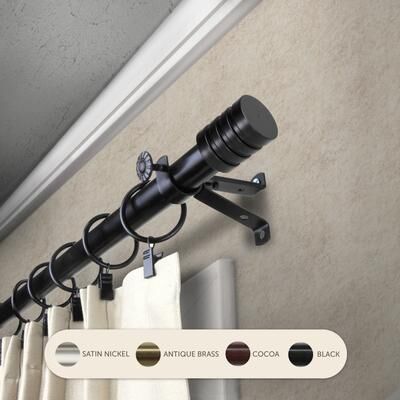
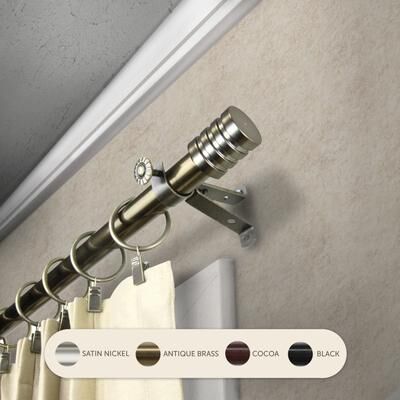


-
How do I determine the limit of this telescoping sum?
To determine the limit of a telescoping sum, you can first write out the general form of the sum and then try to simplify it by canceling out terms. This will often result in a simpler expression that can help you find the limit. You can also try to express the sum as a difference of two series and then find the limits of each series separately. Finally, you can use the properties of limits to find the limit of the telescoping sum. **
-
'How do I calculate the limit of this telescoping series?'
To calculate the limit of a telescoping series, you can first express the series as a partial sum and then take the limit as the number of terms approaches infinity. For example, if you have a series like 1 - 1/2 + 1/2 - 1/3 + 1/3 - 1/4 + ..., you can group the terms and simplify to find a pattern. In this case, you'll notice that most terms cancel out, leaving you with just 1 as the limit of the series. **
-
How can a new waterproofing membrane be applied on top of an old bitumen waterproofing membrane?
To apply a new waterproofing membrane on top of an old bitumen waterproofing membrane, the surface of the old membrane should be thoroughly cleaned and prepared. Any loose debris, dirt, or old adhesive should be removed to ensure proper adhesion of the new membrane. Once the surface is clean, a primer should be applied to promote adhesion between the old and new membranes. Finally, the new waterproofing membrane can be installed according to the manufacturer's instructions, ensuring that it is properly sealed and bonded to the old membrane to provide effective waterproofing. **
-
What is the representation of the partial sums Sn as a telescoping sum?
The representation of the partial sums Sn as a telescoping sum is a sum in which most of the terms cancel each other out, leaving only a few terms that do not cancel. This allows for a simpler expression of the sum, making it easier to compute. In the case of partial sums Sn, the telescoping sum representation allows us to express Sn as the difference between two consecutive terms in the sequence, which simplifies the calculation of the sum. **


What is used to cut the waterproofing membrane?
A utility knife or a sharp blade is typically used to cut the waterproofing membrane. It is important to use a sharp tool to ensure clean and precise cuts, which will help in achieving a proper seal and prevent water leakage. Care should be taken to avoid damaging the underlying surface while cutting the membrane. **
Is the waterproofing membrane applied and then it rains?
Ideally, the waterproofing membrane should be applied in dry weather to ensure proper adhesion and effectiveness. If the membrane is applied and then it rains before it has fully cured, it can compromise its ability to create a watertight seal. Water exposure during the curing process can lead to delamination, reduced adhesion, and potential leaks. Therefore, it is best to apply the waterproofing membrane when there is no rain in the forecast and allow it to fully cure before any water exposure. **
Top-Angebote
Products related to Telescoping:
-
Market Central Telescoping LED Inspection Mirror For Mechanics Telescoping LED Inspection Mirror For MechanicsExperience the confidence of seeing what others can't. This LED inspection mirror helps you inspect tight, dark, and hardtoreach spaces without taking parts apart, making every repair faster and easier. Designed for mechanics, DIY enthusiasts, and...34,97 $*Shipping: 0,00 $Secure redirect to the provider
-
How do you calculate the following telescoping sum?
To calculate a telescoping sum, you first need to express the summands as a partial fraction decomposition. Then, you simplify the sum by pairing up terms that cancel each other out when added together. Finally, you evaluate the remaining terms to find the sum of the series. This method allows you to simplify the sum and find a closed-form expression for the sum. **
-
How do I calculate the limit of this telescoping sum?
To calculate the limit of a telescoping sum, you can first find the general term of the sum and then take the limit as the number of terms approaches infinity. The general term of a telescoping sum can often be found by expressing each term as a difference of two terms. Once you have the general term, you can then take the limit as the number of terms approaches infinity to find the value of the sum. This process allows you to find the limit of the telescoping sum without having to explicitly calculate each term. **
-
How do I determine the limit of this telescoping sum?
To determine the limit of a telescoping sum, you can first write out the general form of the sum and then try to simplify it by canceling out terms. This will often result in a simpler expression that can help you find the limit. You can also try to express the sum as a difference of two series and then find the limits of each series separately. Finally, you can use the properties of limits to find the limit of the telescoping sum. **
-
'How do I calculate the limit of this telescoping series?'
To calculate the limit of a telescoping series, you can first express the series as a partial sum and then take the limit as the number of terms approaches infinity. For example, if you have a series like 1 - 1/2 + 1/2 - 1/3 + 1/3 - 1/4 + ..., you can group the terms and simplify to find a pattern. In this case, you'll notice that most terms cancel out, leaving you with just 1 as the limit of the series. **
Similar search terms for Telescoping
-
How can a new waterproofing membrane be applied on top of an old bitumen waterproofing membrane?
To apply a new waterproofing membrane on top of an old bitumen waterproofing membrane, the surface of the old membrane should be thoroughly cleaned and prepared. Any loose debris, dirt, or old adhesive should be removed to ensure proper adhesion of the new membrane. Once the surface is clean, a primer should be applied to promote adhesion between the old and new membranes. Finally, the new waterproofing membrane can be installed according to the manufacturer's instructions, ensuring that it is properly sealed and bonded to the old membrane to provide effective waterproofing. **
-
What is the representation of the partial sums Sn as a telescoping sum?
The representation of the partial sums Sn as a telescoping sum is a sum in which most of the terms cancel each other out, leaving only a few terms that do not cancel. This allows for a simpler expression of the sum, making it easier to compute. In the case of partial sums Sn, the telescoping sum representation allows us to express Sn as the difference between two consecutive terms in the sequence, which simplifies the calculation of the sum. **
-
What is used to cut the waterproofing membrane?
A utility knife or a sharp blade is typically used to cut the waterproofing membrane. It is important to use a sharp tool to ensure clean and precise cuts, which will help in achieving a proper seal and prevent water leakage. Care should be taken to avoid damaging the underlying surface while cutting the membrane. **
-
Is the waterproofing membrane applied and then it rains?
Ideally, the waterproofing membrane should be applied in dry weather to ensure proper adhesion and effectiveness. If the membrane is applied and then it rains before it has fully cured, it can compromise its ability to create a watertight seal. Water exposure during the curing process can lead to delamination, reduced adhesion, and potential leaks. Therefore, it is best to apply the waterproofing membrane when there is no rain in the forecast and allow it to fully cure before any water exposure. **
* All prices are inclusive of VAT and, if applicable, plus shipping costs. The offer information is based on the details provided by the respective shop and is updated through automated processes. Real-time updates do not occur, so deviations can occur in individual cases. ** Note: Parts of this content were created by AI.