Buy aquapolimery.eu ?
We are moving the project
aquapolimery.eu .
Are you interested in purchasing the domain
aquapolimery.eu ?
domain@kv-gmbh.de · 0541-91531010
Buy aquapolimery.eu ?
What to do if the boning in the corset is bent?
If the boning in your corset is bent, you can try to gently reshape it by hand. Use your fingers to carefully straighten out the boning, being careful not to apply too much pressure and potentially cause it to break. If the boning is too damaged to be reshaped, you may need to replace it with new boning. You can purchase replacement boning from a fabric or craft store and carefully sew it into the corset following the original pattern. **
What causes boning in fabric and how does it lead to poking and scratching?
Boning in fabric is caused by the insertion of rigid materials such as plastic or metal into the seams of garments to provide structure and support. When the boning is not properly encased or secured within the fabric, it can shift and protrude, leading to poking and scratching against the skin. This can be uncomfortable and irritating for the wearer, especially in areas where the boning comes into direct contact with the body. Additionally, over time, the fabric surrounding the boning may wear down, causing the boning to become exposed and leading to further poking and scratching. **


Similar search terms for Shun-Gokujo-Kanso-Boning
Top-Angebote
Products related to Shun-Gokujo-Kanso-Boning:
-
Shun SWT0701 Kanso 6 Inch Utility Knife* This utility knife from the Shun Kanso collection combines features of both a paring knife and a chef's knife. The narrow, straight blade and sharp tip allow this knife to handle detail work, along with slicing and chopping.109,95 $*Shipping: 0,00 $Secure redirect to the provider




-
How can a new waterproofing membrane be applied on top of an old bitumen waterproofing membrane?
To apply a new waterproofing membrane on top of an old bitumen waterproofing membrane, the surface of the old membrane should be thoroughly cleaned and prepared. Any loose debris, dirt, or old adhesive should be removed to ensure proper adhesion of the new membrane. Once the surface is clean, a primer should be applied to promote adhesion between the old and new membranes. Finally, the new waterproofing membrane can be installed according to the manufacturer's instructions, ensuring that it is properly sealed and bonded to the old membrane to provide effective waterproofing. **
-
What is used to cut the waterproofing membrane?
A utility knife or a sharp blade is typically used to cut the waterproofing membrane. It is important to use a sharp tool to ensure clean and precise cuts, which will help in achieving a proper seal and prevent water leakage. Care should be taken to avoid damaging the underlying surface while cutting the membrane. **
-
Is the waterproofing membrane applied and then it rains?
Ideally, the waterproofing membrane should be applied in dry weather to ensure proper adhesion and effectiveness. If the membrane is applied and then it rains before it has fully cured, it can compromise its ability to create a watertight seal. Water exposure during the curing process can lead to delamination, reduced adhesion, and potential leaks. Therefore, it is best to apply the waterproofing membrane when there is no rain in the forecast and allow it to fully cure before any water exposure. **
-
Which pens are suitable for acrylic painting and are sealant-resistant?
When using acrylic paint for painting, it is important to use pens that are specifically designed for use with acrylics. Some popular options include acrylic paint pens, acrylic markers, and acrylic ink pens. These pens are designed to be sealant-resistant, meaning they will not smudge or bleed when a sealant is applied over the painted surface. Look for pens that are labeled as waterproof, fade-resistant, and suitable for use on a variety of surfaces to ensure the best results for your acrylic painting projects. **

Is there a paint coating that is resistant to acid but not resistant to alkali?
Yes, there are paint coatings that are resistant to acid but not resistant to alkali. These coatings are typically formulated with specific chemical compounds that provide acid resistance, but are not as effective against alkali substances. For example, epoxy-based coatings are known for their resistance to acids, but they may not perform as well when exposed to alkali solutions. It is important to consider the specific chemical resistance properties of a paint coating when selecting the right product for a particular application. **
Where can one get food-safe, heat-resistant coating lacquer for food?
One can find food-safe, heat-resistant coating lacquer for food at specialty kitchen supply stores, online retailers that specialize in food-safe products, or through manufacturers that produce coatings specifically designed for food contact surfaces. It is important to ensure that the product is labeled as food-safe and heat-resistant to ensure it meets the necessary safety standards for use with food. Additionally, it is recommended to consult with a professional or expert in food safety to ensure the product is suitable for the intended use. **
Top-Angebote
Products related to Shun-Gokujo-Kanso-Boning:
-
Shun Gokujo Kanso Boning/Fillet Knife, 6.5 Inch* This boning and fillet knife from the Shun Kanso collection has a narrow, curved blade to easily separate meat from bone. The 6.5-inch blade length is ideal for filleting fish, trimming silver skin, or making your own cutlets124,95 $*Shipping: 0,00 $Secure redirect to the provider
-
What to do if the boning in the corset is bent?
If the boning in your corset is bent, you can try to gently reshape it by hand. Use your fingers to carefully straighten out the boning, being careful not to apply too much pressure and potentially cause it to break. If the boning is too damaged to be reshaped, you may need to replace it with new boning. You can purchase replacement boning from a fabric or craft store and carefully sew it into the corset following the original pattern. **
-
What causes boning in fabric and how does it lead to poking and scratching?
Boning in fabric is caused by the insertion of rigid materials such as plastic or metal into the seams of garments to provide structure and support. When the boning is not properly encased or secured within the fabric, it can shift and protrude, leading to poking and scratching against the skin. This can be uncomfortable and irritating for the wearer, especially in areas where the boning comes into direct contact with the body. Additionally, over time, the fabric surrounding the boning may wear down, causing the boning to become exposed and leading to further poking and scratching. **
-
How can a new waterproofing membrane be applied on top of an old bitumen waterproofing membrane?
To apply a new waterproofing membrane on top of an old bitumen waterproofing membrane, the surface of the old membrane should be thoroughly cleaned and prepared. Any loose debris, dirt, or old adhesive should be removed to ensure proper adhesion of the new membrane. Once the surface is clean, a primer should be applied to promote adhesion between the old and new membranes. Finally, the new waterproofing membrane can be installed according to the manufacturer's instructions, ensuring that it is properly sealed and bonded to the old membrane to provide effective waterproofing. **
-
What is used to cut the waterproofing membrane?
A utility knife or a sharp blade is typically used to cut the waterproofing membrane. It is important to use a sharp tool to ensure clean and precise cuts, which will help in achieving a proper seal and prevent water leakage. Care should be taken to avoid damaging the underlying surface while cutting the membrane. **
Similar search terms for Shun-Gokujo-Kanso-Boning
-
Shun SWT0701 Kanso 6 Inch Utility Knife* This utility knife from the Shun Kanso collection combines features of both a paring knife and a chef's knife. The narrow, straight blade and sharp tip allow this knife to handle detail work, along with slicing and chopping.109,95 $*Shipping: 0,00 $Secure redirect to the provider
-
Shun SWT0706 Kanso 8 Inch Chef's Knife* This chef's knife from the Shun Kanso collection can handle nearly every food prep task with ease. Use it for routine cutting tasks like chopping, slicing, and dicing. The rounded belly allows for rocking cuts to mince herbs and garlic144,95 $*Shipping: 0,00 $Secure redirect to the provider
-
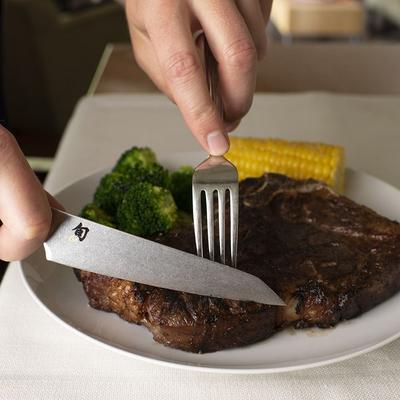
Shun Kanso Steak Knife Set, 4 Piece*This set of steak knives from the Shun Kanso collection will cut steak perfectly, thanks to the razor-sharp fine-edged blades that slice the meat instead of tearing it. These knives will also look beautiful on your table.349,95 $*Shipping: 0,00 $Secure redirect to the provider
-
Is the waterproofing membrane applied and then it rains?
Ideally, the waterproofing membrane should be applied in dry weather to ensure proper adhesion and effectiveness. If the membrane is applied and then it rains before it has fully cured, it can compromise its ability to create a watertight seal. Water exposure during the curing process can lead to delamination, reduced adhesion, and potential leaks. Therefore, it is best to apply the waterproofing membrane when there is no rain in the forecast and allow it to fully cure before any water exposure. **
-
Which pens are suitable for acrylic painting and are sealant-resistant?
When using acrylic paint for painting, it is important to use pens that are specifically designed for use with acrylics. Some popular options include acrylic paint pens, acrylic markers, and acrylic ink pens. These pens are designed to be sealant-resistant, meaning they will not smudge or bleed when a sealant is applied over the painted surface. Look for pens that are labeled as waterproof, fade-resistant, and suitable for use on a variety of surfaces to ensure the best results for your acrylic painting projects. **
-
Is there a paint coating that is resistant to acid but not resistant to alkali?
Yes, there are paint coatings that are resistant to acid but not resistant to alkali. These coatings are typically formulated with specific chemical compounds that provide acid resistance, but are not as effective against alkali substances. For example, epoxy-based coatings are known for their resistance to acids, but they may not perform as well when exposed to alkali solutions. It is important to consider the specific chemical resistance properties of a paint coating when selecting the right product for a particular application. **
-
Where can one get food-safe, heat-resistant coating lacquer for food?
One can find food-safe, heat-resistant coating lacquer for food at specialty kitchen supply stores, online retailers that specialize in food-safe products, or through manufacturers that produce coatings specifically designed for food contact surfaces. It is important to ensure that the product is labeled as food-safe and heat-resistant to ensure it meets the necessary safety standards for use with food. Additionally, it is recommended to consult with a professional or expert in food safety to ensure the product is suitable for the intended use. **
* All prices are inclusive of VAT and, if applicable, plus shipping costs. The offer information is based on the details provided by the respective shop and is updated through automated processes. Real-time updates do not occur, so deviations can occur in individual cases. ** Note: Parts of this content were created by AI.